Teachers require easy methods to assess how English-speaking skills are developed in their students. English speaking skills require more than mastering grammar skills in English. English speaking skills require fluency in English. The use of effective English Classroom Assessment Strategies assists teachers in assessing English-speaking skills in their students without intimidating them.
Listening to Students During Normal Class Time
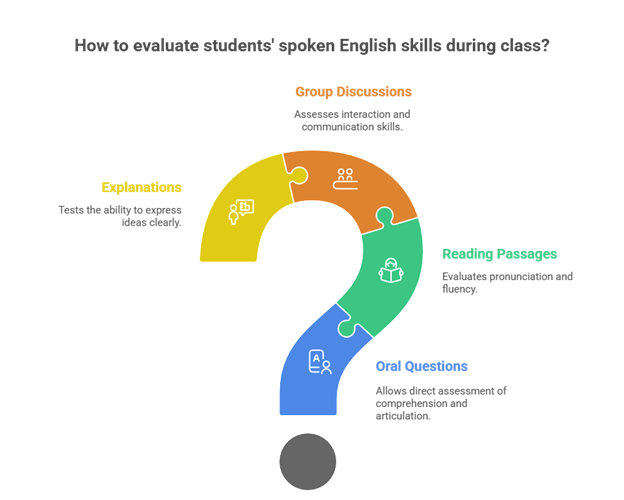
One simple way to evaluate spoken English skills would be to listen to the students as they converse naturally in class. This could be done in regular class sessions.
A teacher can observe a student during:
- Answer questions orally
- Read sentences or short passages
- Discussion in group activity
- Give explanations in their own words
Such observations can be considered basic Classroom Assessment Strategies, which don’t become a test for students.
Paired and Group Speaking Activities
Students feel relaxed when communicating with other students. Pair work and group discussion activities allow all students to talk.
They can check:
- The clarity of the speech that the students
- Whether they attempt to speak English or not
- How confident they sound
- How they respond to others
These practices make Classroom Assessment Strategies friendly and effective.
Short Speaking Tasks
Speaking tasks assist teachers in recognizing skills of each student. The task has to be simple and age-related.
Examples include:
- Describing an Image
- Discussion on a preferred activity
- Describe a daily routine
- Sharing a short story
These are excellent Classroom Assessment Strategies since the students share freely without any pressure.

Using Simple Criteria to Check Speaking
Teachers can assess the use of English in speech using simple points. There is no need to focus on long marks.
Basic points may include:
- Good pronunciation
- Complete sentences
- Confident public speaking
- Correct usage of simple words
The criteria are what make Classroom Assessment Strategies a fair and straightforward method for teachers and students alike.
Peer and Self-Checking
Students can also discover new words and meanings by examining their own speaking or listening to friends.
Teachers may request of students:
- Tell them what they did right
- Tell them what they want to improve
- Provide kind feedback for classmates
This technique is supportive of ‘Classroom Assessment Strategies’ because it empowers students to actively participate in the learning process.