

Many learners often ask why Tamil students struggle with English mistakes even after years of study. The challenge isn’t lack of effort but how English and Tamil differ in structure and usage. Students frequently translate from Tamil to English, which slows down their speaking and sometimes results in confusing sentences. Recognizing the reasons behind these mistakes is the first step toward improvement.
Common English mistakes Tamil students make
Several errors appear regularly among Tamil learners:
- Mixing Tamil sentence structures with English, e.g., “I am went to market” instead of “I went to the market.”
- Misusing prepositions like saying “good in English” instead of “good at English.”
- Overusing direct translations, which may sound unnatural in English.
Observing and correcting these patterns helps learners speak more clearly. Paying attention to spoken English mistakes Tamil speakers make allows learners to notice recurring errors and avoid them in conversations.
The reasons behind these mistakes
Understanding the cause is crucial. Tamil students struggle due to:
- Structural differences: Tamil follows a subject-object-verb order, while English uses subject-verb-object.
- Limited practice: Many focus on grammar exercises rather than speaking.
- Fear of mistakes: Hesitation leads to fewer attempts at real conversations.
Have you noticed yourself forming a sentence in Tamil first and then converting it into English? This is one of the main reasons errors occur, slowing your fluency.
Practical ways to improve English
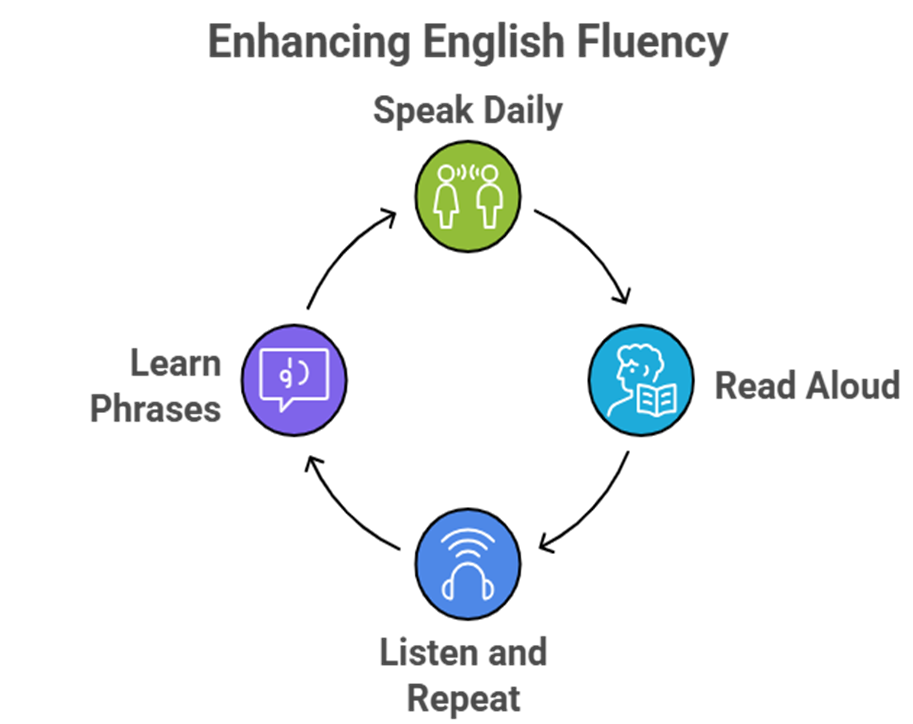
To overcome these issues and how to improve English for Tamil learners, try these methods:
- Speak daily, even in short sentences, and gradually increase complexity.
- Read aloud simple articles or dialogues to improve sentence flow.
- Listen to English movies, podcasts, or videos, and repeat natural expressions.
- Learn common conversational phrases rather than translating word by word.
These small, consistent actions make English thinking more natural and reduce errors significantly.
Build confidence and consistency
English Fluency grows when practice is regular. Start with five to ten minutes daily and gradually expand your use of English in real-life situations. Understanding why Tamil students struggle with English mistakes allows learners to focus on key areas like sentence structure, prepositions, and pronunciation. With patience, you will notice fewer mistakes and more confidence while speaking.
Remember, the goal isn’t perfection it’s clarity and effective communication.