
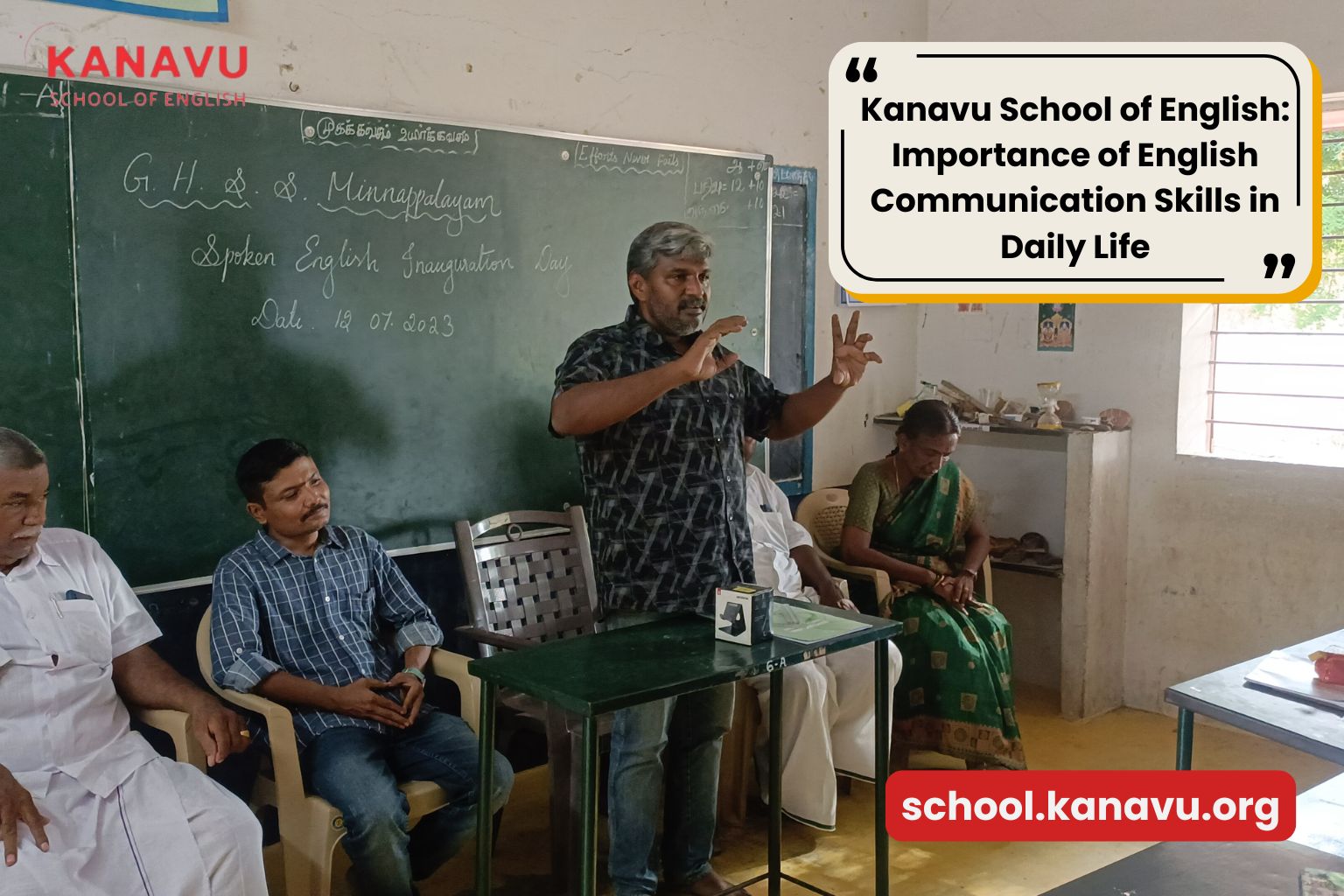
The Kanavu School of English is an education initiative by Kanavu Startup Village that helps rural students learn to speak English confidently. It started in Sivagiri, Tamil Nadu, and has now expanded to many government schools across the Erode district.The main goal of the school is to improve English communication skills so students can speak clearly in school, in public, and in their future jobs. You can learn more about their programs at:https://school.kanavu.org/ Why English Communication Skills Are Important Today In today’s world, English is used almost everywhere. From classrooms to offices, knowing how to speak clearly helps people succeed. English communication skills help students to: • Ask questions in class without fear• Understand lessons better• Speak confidently in interviews• Communicate with people from different places Many rural students understand English words but hesitate to speak. Kanavu School of English focuses on removing this fear. How Kanavu School of English Improves Communication Instead of only using textbooks, the school teaches English in a practical way. Some learning methods include: • Daily speaking practice• Group conversations• Reading simple stories aloud• Role play activities like talking to teachers or friends• Fun learning games These activities help students slowly improve their English communication skills in a natural and easy way. Real Impact in Rural Schools Kanavu School of English is working in more than 25 government schools and learning centres in the Erode district. Some real examples are: • Over 120 students learning at Perundurai East Middle School• Around 100 students trained at Sivagiri Government School• Many smaller village schools with 25 to 50 students each Teachers have shared that students are now more confident and active in class. Parents also notice that their children try to speak English at home. This shows how English communication skills can change a student’s attitude toward learning. How Students Benefit in Daily Life After joining the program, students experience many improvements: • They speak without fear• They understand English lessons faster• They take part in school activities confidently• They feel proud of themselves Strong English communication skills help students perform better not only in school but also in social life. Why This Program Matters for the Future In rural areas, students often do not get enough chances to practice English speaking. Kanavu School of English fills this gap by providing regular training and friendly support. By building English communication skills from a young age, the school is helping students prepare for higher studies, jobs, and modern life. To know more about their centres and activities, visit:https://school.kanavu.org/ Quick Highlights • Kanavu School of English started in Sivagiri• It now works in over 25+ schools• Focus is on spoken English and confidence• Hundreds of rural students are benefitting• English communication skills are taught in simple ways
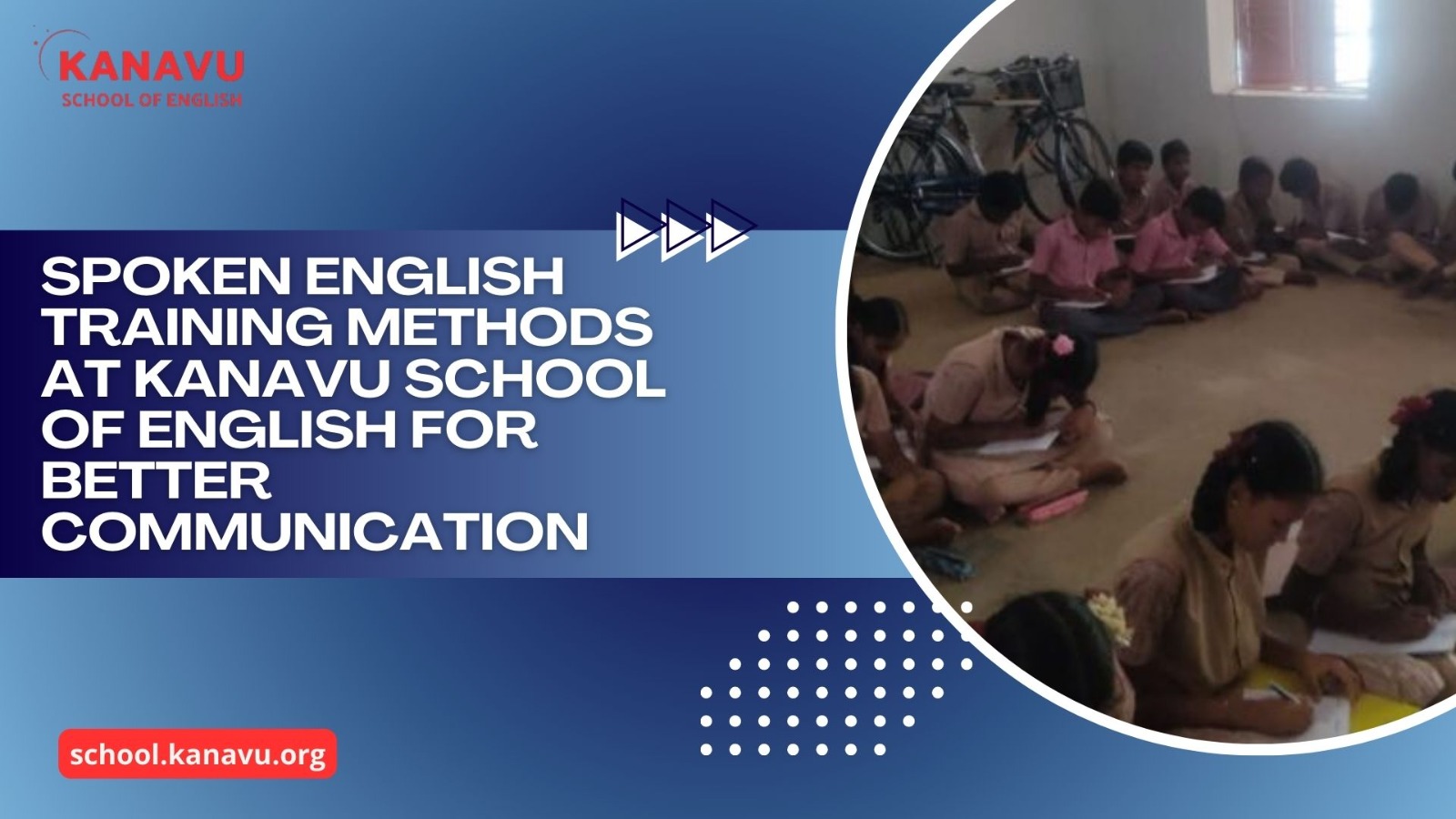
Spoken English Training Methods at Kanavu School of English for Better Communication
Improving communication skills through English is a key focus of the Kanavu School of English, especially for students in rural communities. The school’s spoken English training methods are designed to help learners build confidence, use English naturally in everyday situations, and overcome language barriers that many rural students face. Overview of the Kanavu School of English Program The Kanavu School of English operates in several government schools across Tamil Nadu, including locations at Thamaraipalayam, Sivagiri, Karavalasu, and more. These programs bring structured English language learning directly to students in rural settings. Rather than focusing solely on written lessons and textbooks, the school uses spoken English training methods that emphasize real communication, frequent practice, and student participation. Daily and Structured Practice Approach One of the fundamental spoken English training methods at the Kanavu School of English is regular and consistent practice: These structured time slots help students transition from fragmented learning to routine practice, which is critical for real improvement in communication. Real Conversation and Interactive Learning Rather than teaching language through memorization, the spoken English training methods at Kanavu focus on: In many centres, instructors use friendly and interactive techniques so that students naturally pick up how to speak, think, and express ideas in English. This approach helps students become comfortable with the language instead of feeling anxious about making mistakes. Confidence Building Through Engagement Another effective component of the spoken English training methods at Kanavu is confidence building. Teachers encourage students to: This focus on confidence is notable in Kanavu’s classroom environments, where students are helped to build self-belief as much as language skills. Community and Collaboration The expansion of the Kanavu School of English across multiple locations shows how well-designed spoken English training methods can be adapted to different communities. Classes are often supported by school leadership and dedicated teachers who work closely with students each day: These efforts highlight how practical speaking methods can help learners from diverse backgrounds improve their English communication skills. Impact on Communication Skills The spoken English training methods used at the Kanavu School of English lead to positive outcomes, including: This real-world communication focus distinguishes Kanavu’s training from more traditional language teaching approaches, where grammar and writing are often emphasized over spoken ability. The spoken English training methods implemented at Kanavu School of English are practical, interactive, and confidence-oriented. By providing regular, structured opportunities for students to speak and engage with the language, Kanavu helps learners build real communication skills that will serve them beyond the classroom. These methods — grounded in real conversation, frequent practice, and supportive instruction — are central to the school’s mission of empowering rural students to communicate boldly and confidently in English.

From Kodumudi to Sivagiri: Transforming English Learning for Rural Students with Kanavu School of English
English communication is often seen as a door to education, career opportunities, and confidence. But for many children and young adults in rural India, access to quality English language learning has been limited. The Kanavu School of English is changing that reality by making English learning for rural students both accessible and empowering. How the Journey Began The story of Kanavu School of English began with a simple but powerful idea—to help rural communities overcome language barriers that limited their futures. The initiative was founded under the broader umbrella of Kanavu.org, led by visionaries who saw that even talented students struggled because they lacked confidence in English communication. Rather than focusing only on urban centers, the school was rooted in places like Sivagiri and Kodumudi, bringing high-quality language education right into the heart of rural districts. Today it has expanded to multiple locations across Erode district and nearby regions, with many branches helping hundreds of students every year. What the School Offers The Kanavu School of English is designed to support English learning for rural students in ways that classroom textbooks alone often cannot. The program: Classes usually run weekly with multiple sessions, helping students build skills steadily over an extended period. This makes learning supportive and sustained rather than rushed. Impact Across Schools The school’s reach has grown significantly: These programs show how English learning for rural students can be scaled across locations with consistency and care. Real Changes, Real Confidence The difference goes beyond grammar and vocabulary. Students who once hesitated to speak in English are now participating in conversations, presenting ideas, and expressing themselves in ways that were once out of reach. This transformation helps them not just in school, but in future academic pursuits, job interviews, and community interactions. A Vision That Continues to Grow The growth of Kanavu School of English from its humble beginnings in Sivagiri to far-reaching classrooms across rural Tamil Nadu proves that English language learning doesn’t have to be limited to big cities. The school’s mission of English learning for rural students is rooted in: Learning Beyond the Classroom At Kanavu School of English, English learning for rural students goes beyond textbooks and exams. Students are encouraged to practice speaking in real-life situations, build confidence through daily interaction, and learn without fear of making mistakes. This approach helps them use English naturally in their studies and everyday life.

Kanavu School of English: Building Confidence in Spoken English for Rural Students Without Fear
In many rural communities across India, especially in districts like Erode in Tamil Nadu, students often struggle with English due to limited exposure, lack of resources, and fear of speaking the language. The Kanavu School of English has taken significant steps to address this challenge by creating structured programs that focus on building confidence in spoken English for learners who would otherwise remain hesitant to communicate in a global language. The Mission of Kanavu School of English Kanavu School of English was founded with a mission to empower rural learners by helping them overcome language barriers that can limit educational and career opportunities. The school’s core objective is to help students gain fluency, develop communication skills, and build self-assurance when using English. The institution provides both classroom-based and practical spoken English training, aiming for accessible education that nurtures learners’ confidence. The approach is not just about memorizing grammar or vocabulary, but about encouraging students to use English comfortably in real interactions. Structured Training for Rural Students Across multiple rural government schools, the Kanavu School of English delivers tailored spoken English programs. These programs are carefully designed to ensure students gain comfortable communication abilities, without fear or hesitation. Classes typically include interactive sessions, vocabulary building, and practical speaking exercises that engage students in lively, meaningful conversation. Key Features of the Program Real Impact on Students Since its inception, Kanavu School of English has expanded to numerous locations, bringing spoken English opportunities to hundreds of rural learners. For example: Across locations, these programs strengthen students’ abilities to communicate effectively and build confidence in spoken English in a supportive environment, helping them overcome reluctance and fear. The Importance of Confidence in Language Learning Developing command over spoken English does not happen through textbooks alone. Confidence plays a vital role in encouraging learners to express thoughts, participate in discussions, and interact with teachers and peers. The Kanavu School of English understands this and places emphasis on reducing fear—an essential barrier that inhibits many students from practicing the language. Developing command over spoken English does not happen through textbooks alone. Confidence plays a vital role in encouraging learners to express thoughts, participate in discussions, and interact with teachers and peers. Studies on challenges faced by rural students in learning spoken English highlight fear and hesitation as major barriers. The Kanavu School of English understands this and places emphasis on reducing fear—an essential barrier that inhibits many students from practicing the language. By focusing on comfortable, fear-free learning, the school ensures that students do not just know English but use it confidently. This has positive effects on their academic performance, social interactions, and future opportunities. The efforts of the Kanavu School of English illustrate how targeted spoken English training can transform lives in rural areas. By prioritizing a supportive learning environment and practical communication skills, the school contributes to building confidence in spoken English for rural students without fear. Through structured programs, regular practice, and caring educators, learners are discovering that English can be a tool for opportunity rather than a source of anxiety.

Inside Kanavu School of English: A Step-by-Step Method for Spoken English Improvement in Daily Life
Learning English becomes meaningful only when it helps people speak confidently in daily life. At Kanavu School of English, the focus is not on memorizing rules, but on helping learners use English naturally in real situations. The school follows a clear and practical method that supports Spoken English Improvement step by step. Understanding the Need for Spoken English Improvement Many learners understand English but hesitate to speak it. Kanavu School of English community programs work closely with learners from different backgrounds and clearly understand these real-life communication challenges. Common problems faced by learners: Kanavu’s teaching style directly addresses these issues to ensure Spoken English Improvement happens naturally. Step-by-Step Teaching Method at Kanavu School of English Kanavu School of English follows a structured yet simple learning path that supports learners at every stage. Step 1: Building Confidence First Confidence is the foundation of Spoken English Improvement. Confidence is the foundation of Spoken English Improvement challenges and solutions Step 2: Learning Through Daily Conversations Instead of complex textbook lessons, learners practice: This helps learners connect English with everyday life, which leads to steady Spoken English Improvement. Step 3: Activity-Based Learning Kanavu School uses practical activities to improve speaking skills: These activities make learning engaging and effective for Spoken English Improvement. Step 4: Focus on Usage, Not Memorization At Kanavu School of English: This method helps learners remember and apply English easily, resulting in long-term Spoken English Improvement. How Kanavu School of English Creates a Supportive Environment The learning environment plays a big role in communication skills. Kanavu ensures: Such an environment motivates learners to practice more and achieve Spoken English Improvement confidently. Real-Life Outcomes Seen at Kanavu Learners trained at Kanavu School of English often show: These outcomes reflect how consistent practice and guidance lead to effective Spoken English Improvement method in real communication.. Simple Habits Encouraged by Kanavu for Daily Practice Kanavu also encourages learners to practice outside the classroom: These habits support continuous Spoken English Improvement. Kanavu School of English follows a realistic, learner-friendly approach that focuses on confidence, daily usage, and regular practice. Their step-by-step method helps learners achieve meaningful Spoken English Improvement for everyday life, making English a useful skill rather than just a subject.

Kanavu School of English Community Programs That Improve Spoken English and Lifelong Communication Skills
The Kanavu School of English is a grassroots language initiative functioning under the larger Kanavu.org ecosystem. It was started with the intention of helping rural learners overcome hesitation in spoken English and build confidence through consistent practice. The belief behind the initiative is simple — strong Communication Skills can open doors to education, employment, and self-expression. The school began its work in Sivagiri, Erode district, and over time expanded to multiple government schools and rural locations based on local need and community support. Where and How the Programs Are Implemented Kanavu School of English does not operate as a single center. Instead, it functions through on-ground programs conducted directly inside government schools and nearby community spaces. Some of the real locations where Kanavu School of English programs have been implemented include(view all locations): Each location follows a similar structure but adapts to the local context, number of learners, and school schedules. Community Programs Designed for Real-Life Use The focus of these programs is not examination-based English. Instead, learners are guided to use spoken English in daily situations. Sessions are conducted regularly so that learners get repeated exposure. Common elements of the programs include: This consistent exposure helps learners gradually strengthen their Communication Skills in a stress-free environment. How Kanavu School of English Teaches The English language teaching methodology is intentionally simple and practical. Kanavu School of English follows an activity-first method, where speaking comes before theory. Teaching methods include: Learners are encouraged to speak even if they make mistakes. This approach builds confidence and improves pronunciation, vocabulary, and sentence formation over time, leading to stronger Communication Skills. Why This Teaching Model Works Kanavu’s model works because it aligns with the reality of rural learners. Many students understand English but hesitate to speak. The program addresses this gap directly. The model works because it: As learners speak more, their fear reduces and their Communication Skills improve naturally. Support from Schools and Local Communities The success of Kanavu School of English programs depends heavily on collaboration. Headmasters, teachers, and local coordinators work closely with the Kanavu team to ensure sessions run consistently. This collaboration: Through this structured support, learners develop lasting Communication Skills that benefit them academically and personally.

Spoken English Learning for Rural Students Through Kanavu School of English
Kanavu School of English was started with one simple thought:English should not be a fear for rural students. It should be a tool that gives them confidence. Many students understand English but hesitate to speak. Kanavu was created to change this by making spoken english learning friendly, simple, and practical. How Kanavu School of English Began Kanavu School of English began in Annamalaikottai, Sivagiri, inside the Kanavu Startup Village. The founders noticed that many rural students had ideas and talent but lacked confidence in speaking English. Instead of focusing only on grammar rules, Kanavu started focusing on: This vision shaped the foundation of spoken english learning at Kanavu. Where Kanavu School of English Is Located Kanavu School of English operates from rural regions and continues to grow step by step. Current presence includes: By bringing spoken english learning closer to students’ homes, Kanavu removes the barrier of distance and access. How Kanavu Helps Rural Students Learn English Kanavu understands that rural students need a safe and supportive space to speak. Learning happens through practice, not pressure. Kanavu helps students through: This method helps students slowly gain confidence in spoken english learning. Focus on Confidence, Not Fear Kanavu School of English believes mistakes are part of learning. Students are encouraged to speak freely without worrying about perfection. The focus is on: Through this approach, spoken english learning becomes natural and stress-free. Why Kanavu School of English Matters Kanavu works with a social purpose. It supports students who may not have access to costly English training but still deserve quality learning. By offering structured and caring spoken english learning, Kanavu helps rural students: Kanavu School of English is not just teaching a language. It is helping students believe in their voice. To know more about locations, courses, and activities, visit https://school.kanavu.org/

Common Grammar Errors That Affect Spoken English Fluency
Many people understand English but feel nervous while speaking. One main reason is grammar mistakes. These mistakes can slow down speech and reduce confidence. Learning about Common grammar errors helps speakers improve fluency step by step and supports the development of real-world communication skills. Why Grammar Matters in Spoken English Grammar gives structure to our sentences. When grammar is weak, listeners may feel confused even if the idea is good. Avoiding Common grammar errors makes spoken English clearer and smoother, especially when learners focus on effective communication in daily life. Good grammar helps speakers: Incorrect Use of Tenses One of the most Common grammar errors is using the wrong tense while speaking. Examples: To improve: Subject–Verb Agreement Mistakes Another frequent problem is subject–verb mismatch. This is one of the Common grammar errors that affects sentence clarity. A clear understanding of subject–verb agreement helps speakers choose the correct verb form based on the subject and speak more accurately. Examples: Tip: Wrong Sentence Order Many learners translate directly from their mother tongue. This leads to Common grammar errors in sentence structure. Examples: Practice speaking simple sentences first to improve word order. Missing Articles (a, an, the) Articles are small words, but missing them is one of the Common grammar errors in spoken English. Examples: Listening to English conversations helps learners notice correct article usage. How to Reduce Grammar Errors While Speaking You do not need perfect grammar to speak well. Focus on improvement, not fear. Helpful habits: With regular practice, fluency will improve naturally.

Strategies for Classroom Assessment for Evaluating Spoken English Abilities in School-going Children
Teachers require easy methods to assess how English-speaking skills are developed in their students. English speaking skills require more than mastering grammar skills in English. English speaking skills require fluency in English. The use of effective English Classroom Assessment Strategies assists teachers in assessing English-speaking skills in their students without intimidating them. Listening to Students During Normal Class Time One simple way to evaluate spoken English skills would be to listen to the students as they converse naturally in class. This could be done in regular class sessions. A teacher can observe a student during: Such observations can be considered basic Classroom Assessment Strategies, which don’t become a test for students. Paired and Group Speaking Activities Students feel relaxed when communicating with other students. Pair work and group discussion activities allow all students to talk. They can check: These practices make Classroom Assessment Strategies friendly and effective. Short Speaking Tasks Speaking tasks assist teachers in recognizing skills of each student. The task has to be simple and age-related. Examples include: These are excellent Classroom Assessment Strategies since the students share freely without any pressure. Using Simple Criteria to Check Speaking Teachers can assess the use of English in speech using simple points. There is no need to focus on long marks. Basic points may include: The criteria are what make Classroom Assessment Strategies a fair and straightforward method for teachers and students alike. Peer and Self-Checking Students can also discover new words and meanings by examining their own speaking or listening to friends. Teachers may request of students: This technique is supportive of ‘Classroom Assessment Strategies’ because it empowers students to actively participate in the learning process.
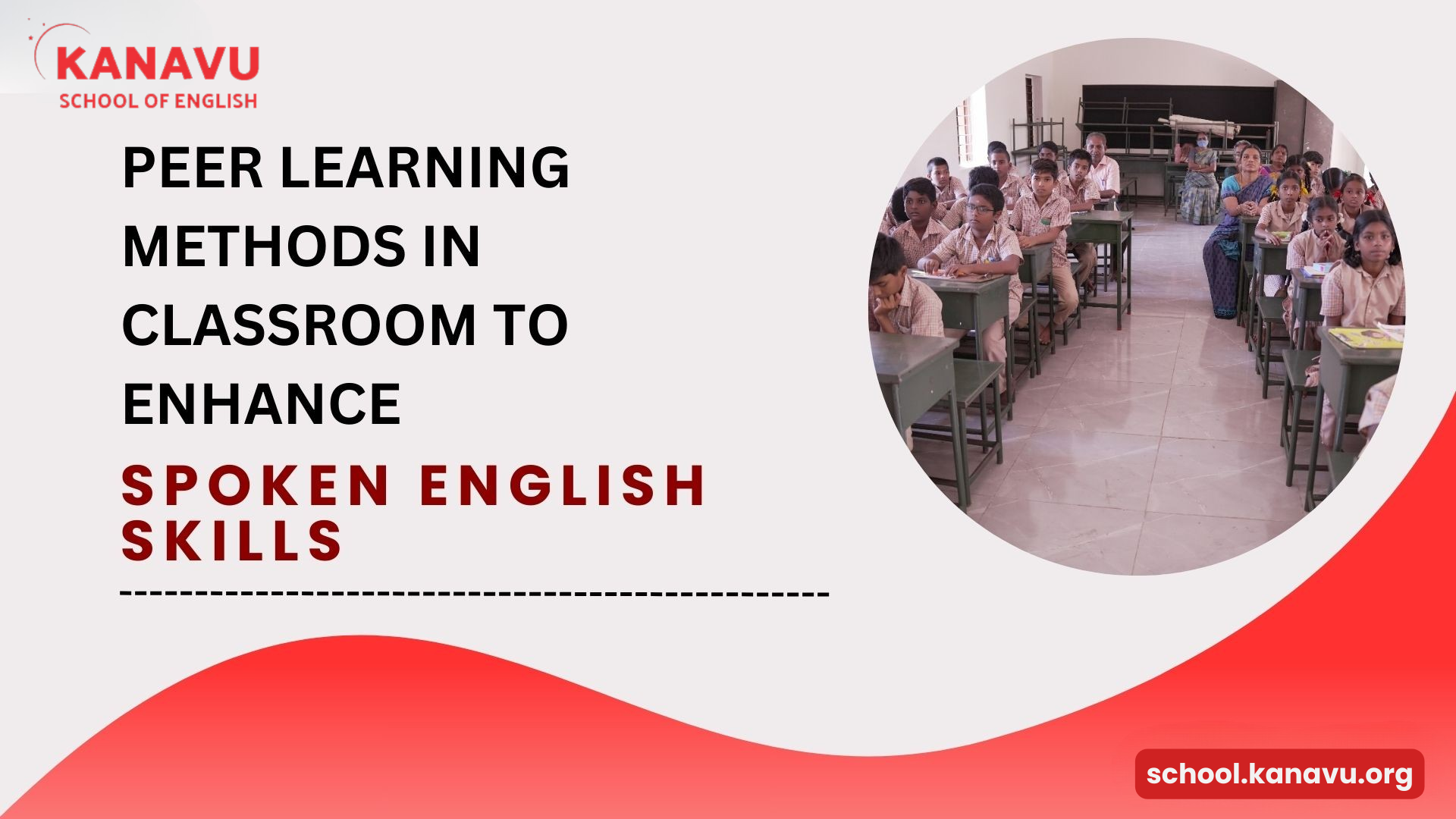
Peer Learning Methods in Classroom to Enhance Spoken English Skills
Peer learning has become one of the most effective ways to help students improve communication abilities within the classroom. When students learn with and from each other, they gain confidence, practice real conversations, and develop stronger spoken English skills naturally. This method encourages teamwork, active participation, and a safe space to speak without fear. Why Peer Learning Works for Spoken English Development Students often feel more comfortable speaking with classmates than with teachers. This relaxed environment allows them to practice freely. Through peer activities, students can correct each other, share ideas, and develop their spoken English skills in a supportive setting. Peer learning also reduces hesitation because students know they are learning together at the same level. Simple Peer Learning Methods That Improve Spoken English Pair Conversations Students work in pairs and discuss simple topics like daily routines, hobbies, or classroom activities. This helps them: Pair talks encourage regular use of spoken English skills in a natural way. Group Discussions Small groups of students sit together and talk about a topic given by the teacher. These discussions help students: Group work greatly supports classroom-based growth in spoken English skills. Role-Play Activities Role-play allows students to act out real-life situations such as: These activities strengthen spoken English skills by helping students practice practical communication. Peer Feedback Session After speaking activities, students can give each other simple feedback. This helps them: Peer feedback builds awareness and improves spoken English skills through helpful suggestions. Benefits of Peer Learning in the Classroom Peer learning makes the classroom interactive and encourages students to participate freely. It creates a positive atmosphere where students learn: When students feel supported by classmates, they practise their spoken English skills more often and more confidently. Peer learning is a simple yet powerful method to improve classroom communication. Through pair conversations, group discussions, role-plays, and feedback sessions, students develop stronger spoken English skills with consistent practice. When students teach and learn from each other, they grow more confident, more fluent, and more willing to speak in everyday situations.