
Idiomatic expressions in English are phrases that people use in everyday conversations to express ideas in a more natural and interesting way. While students may learn English through textbooks, real conversations often include expressions whose meanings are different from the actual words used.
Learning a few common idioms can make speaking more enjoyable and help students understand how English is used in real-life situations. At Kanavu School of English, students are encouraged to explore practical English that helps them communicate with confidence.
Read our blog on Kanavu School of English: Building Confidence in Spoken English for Rural Students Without Fear to know about how Kanavu School works for rural students empowerment.
Idiomatic Expressions in English Make Conversations More Natural
Many English speakers use idioms without even thinking about it. Understanding these expressions helps students follow conversations more easily and sound more natural when they speak.
Some examples include:
- “Break the ice” – to start a conversation
- “Piece of cake” – something very easy
- “Hit the books” – to start studying
- “Under the weather” – feeling unwell
Learning these common English idioms helps students understand everyday English beyond textbook lessons.
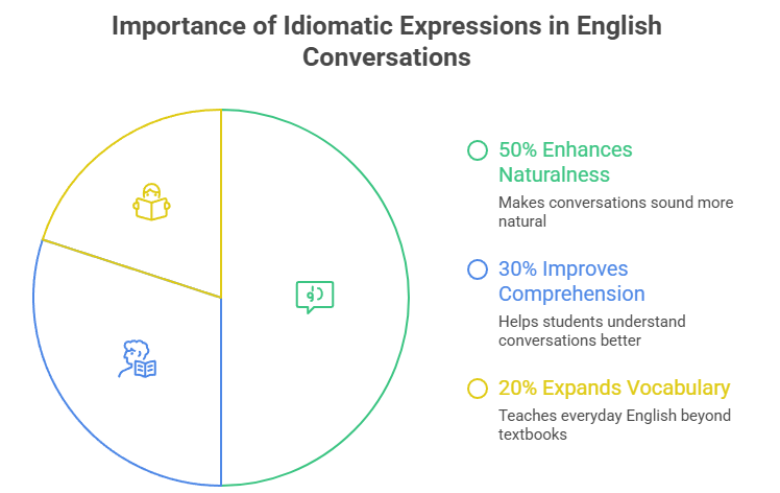
Idioms Help People Express Ideas More Naturally
Idiomatic expressions in English make conversations more colourful and expressive. Instead of using long explanations, people often use short phrases that quickly communicate an idea or feeling.
Students can benefit by:
- Understanding movies and videos more easily
- Following conversations with confidence
- Learning how native speakers communicate
- Expanding their vocabulary naturally
Regular exposure to common English idioms helps students become more comfortable with spoken English.
Small Idioms Can Make a Big Difference
Many students think fluency comes only from learning grammar and vocabulary. In reality, idiomatic expressions in English help learners understand the natural style of communication used in everyday life.
As students learn more idioms, they can:
- Express ideas more naturally
- Understand informal conversations better
- Improve listening skills
- Participate more confidently in discussions
Using common English idioms in the right situations can make communication feel more natural and engaging.
Learning a few common idiomatic expressions with their meaning can make speaking more enjoyable and help students understand how English is used in real-life situations.
How Can Idioms Help Students Become Better Communicators?
Students who understand idiomatic expressions in English often find it easier to connect with spoken English in movies, classrooms, and conversations. These expressions help learners understand meanings that may not be obvious from individual words.
Some long-term benefits include:
- Better listening comprehension
- Greater confidence while speaking
- Improved understanding of real-world English
- Stronger communication skills
Learning common English idioms step by step helps students become more confident and effective communicators.
Idiomatic expressions in English help students move beyond basic language learning and understand how English is used in real conversations. Even a few well-known idioms can make conversations easier to follow and more enjoyable to participate in.
At Kanavu School of English, students learn practical English that prepares them for everyday communication. By understanding idioms and using them naturally, students can speak with greater confidence and connect more easily with the world around them.
Also Read: Kanavu School of English That Builds Strong English Communication Skills in Rural Students