
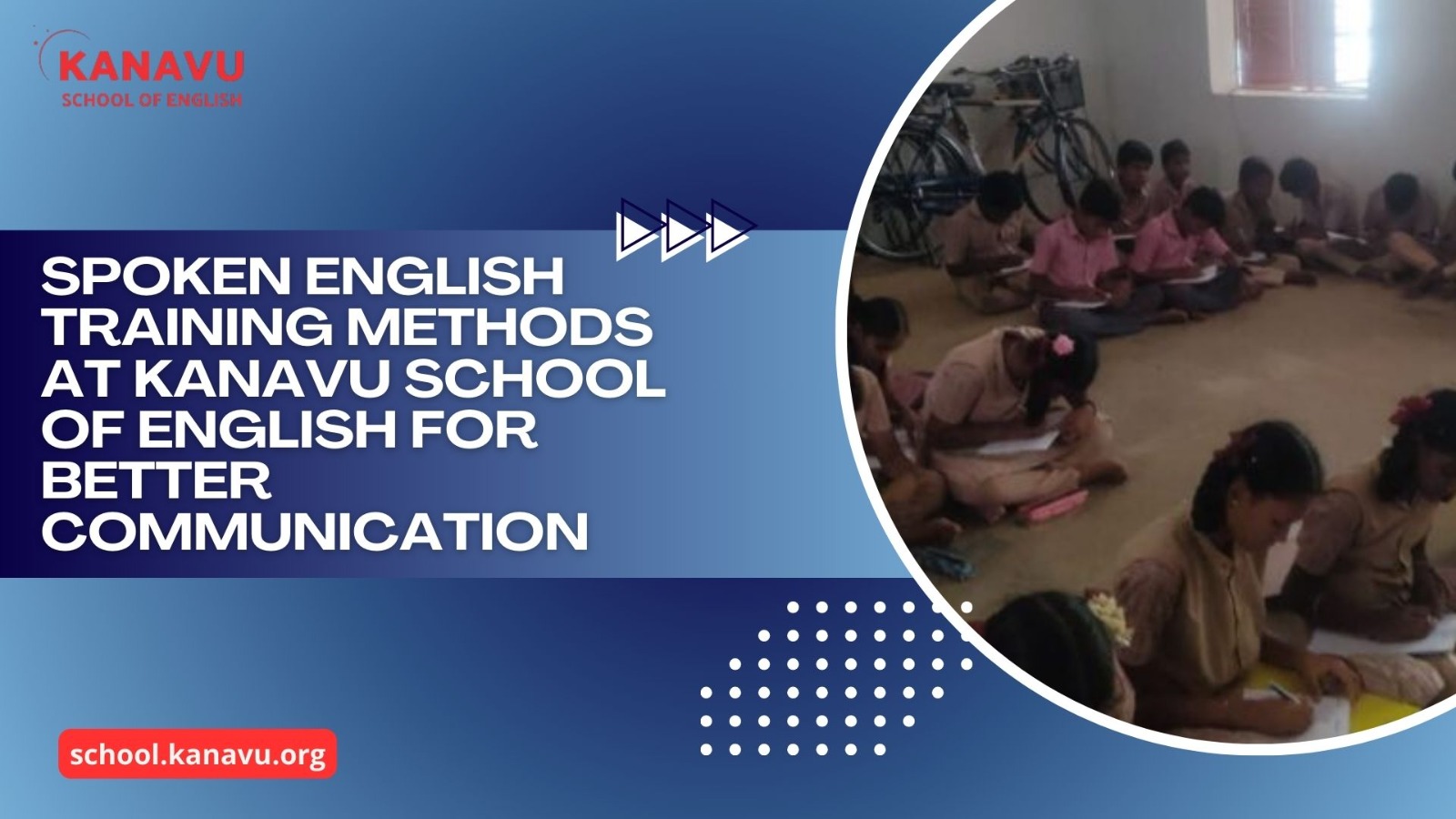
Improving communication skills through English is a key focus of the Kanavu School of English, especially for students in rural communities. The school’s spoken English training methods are designed to help learners build confidence, use English naturally in everyday situations, and overcome language barriers that many rural students face.
Overview of the Kanavu School of English Program
The Kanavu School of English operates in several government schools across Tamil Nadu, including locations at Thamaraipalayam, Sivagiri, Karavalasu, and more. These programs bring structured English language learning directly to students in rural settings.
Rather than focusing solely on written lessons and textbooks, the school uses spoken English training methods that emphasize real communication, frequent practice, and student participation.
Daily and Structured Practice Approach
One of the fundamental spoken English training methods at the Kanavu School of English is regular and consistent practice:
- At Government Higher Secondary School, Karavalasu, spoken English classes run daily during school hours, giving students a dedicated time each day to focus on communication skills.
- At the Thamaraipalayam centre, spoken English training is offered every school day, allowing learners to practice frequently and steadily improve.
These structured time slots help students transition from fragmented learning to routine practice, which is critical for real improvement in communication.
Real Conversation and Interactive Learning
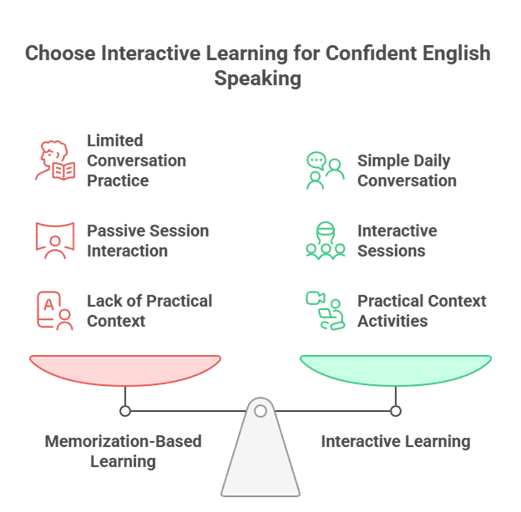
Rather than teaching language through memorization, the spoken English training methods at Kanavu focus on:
- Simple daily conversation practice
- Interactive sessions that encourage students to speak freely
- Activities that help learners use English in practical contexts
In many centres, instructors use friendly and interactive techniques so that students naturally pick up how to speak, think, and express ideas in English.
This approach helps students become comfortable with the language instead of feeling anxious about making mistakes.
Confidence Building Through Engagement
Another effective component of the spoken English training methods at Kanavu is confidence building. Teachers encourage students to:
- Speak without fear, even when they make mistakes
- Use English words during conversations with peers
- Participate in group discussions and role plays
This focus on confidence is notable in Kanavu’s classroom environments, where students are helped to build self-belief as much as language skills.
Community and Collaboration
The expansion of the Kanavu School of English across multiple locations shows how well-designed spoken English training methods can be adapted to different communities. Classes are often supported by school leadership and dedicated teachers who work closely with students each day:
- In Thamaraipalayam, around 50 students receive guided spoken English training daily.
- In Karavalasu, more than 50 students are actively participating in communication practice sessions.
These efforts highlight how practical speaking methods can help learners from diverse backgrounds improve their English communication skills.
Impact on Communication Skills
The spoken English training methods used at the Kanavu School of English lead to positive outcomes, including:
- Enhanced confidence when speaking English
- Better ability to express thoughts in clear sentences
- Increased participation in classroom conversations
- Greater readiness for future educational and professional opportunities
This real-world communication focus distinguishes Kanavu’s training from more traditional language teaching approaches, where grammar and writing are often emphasized over spoken ability.

The spoken English training methods implemented at Kanavu School of English are practical, interactive, and confidence-oriented. By providing regular, structured opportunities for students to speak and engage with the language, Kanavu helps learners build real communication skills that will serve them beyond the classroom. These methods — grounded in real conversation, frequent practice, and supportive instruction — are central to the school’s mission of empowering rural students to communicate boldly and confidently in English.